The Questions People Ask When Your Marketing Is Missing Something

The questions from your potential buyers almost never mean what you think they mean, and I'm about to show you.
The questions people ask before purchasing are rarely random…they’re clues.
Someone asking, “How long will this take?” does not need more information about the program or even an actual timeline. They need stronger belief that the result is possible for them. Someone asking, “Couldn’t I just learn this on YouTube?” probably doesn’t need a list of 10 reasons why they, in fact, can’t learn it on YouTube. They need to understand why your approach, and why YOU, are different.
Once you know what a question is really signaling, you can stop answering every objection with more details and start fixing the deeper more invisible part of your marketing that created the question in the first place.
These questions usually mean the buyer doesn’t fully trust the method, the proof, the offer, or their ability to get the result yet.
- “Has anyone ever implemented everything and still not gotten results?”
- “How do I know this will work for me?”
- “Are these results typical?”
- “Do you have testimonials from someone in my niche?”
- “Has anyone regretted buying?”
- “Is this safe?”
- “Can I trust this process?”
- “Will I feel stupid if I spend the money and it doesn’t work?”
- “Do people like me actually succeed with this?”
More specific proof**, stronger case studies, transparent expectations, examples from different types of customers, and content that explains why the method works, not just that it works.
These questions mean the buyer understands the general topic, but they don’t yet understand why your offer, method, or perspective is the one they should choose.
- “How is this different from other programs?”
- “Couldn’t I just learn this on YouTube?”
- “Can’t I use ChatGPT for this?”
- “Why do I need your program specifically?”
- “What makes your method different?”
- “Why you?”
- “Why this method?”
- “What do you know, see, or do differently?”
- “Why shouldn’t I choose the cheapest or easiest alternative?”
Stronger positional messaging. Your content should make your experience, perspective, process, standards, and way of solving the problem unmistakable. The goal is to become the one they want to learn from, not simply another person teaching the same information.
These questions usually mean the buyer can see what they receive, but they haven’t connected those deliverables to a meaningful outcome.
- “What exactly do I get?”
- “Is it mostly videos?”
- “How many modules are there?”
- “What makes it worth the price?”
- “Are there templates included?”
- “What will this actually change for me?”
- “Am I paying for information I already know?”
- “Will this make my life easier, faster, more profitable, or less stressful?”
A clearer connection between each feature and the result it helps create. Don’t stop at “You get twelve modules.” Explain what those modules help someone understand, build, avoid, or accomplish. In my Stress Free Sales program, I call this SO YOU CAN. “I teach [THING] so you can [TANGIBLE RESULT].”
These questions mean the buyer believes the offer works for other people, but they haven’t decided whether it can work for them.
- “How long does it usually take to see results?”
- “Will this work with a small audience?”
- “Does this work in my niche?”
- “Can this work if I’m starting from zero?”
- “Will this still work if I’ve already tried other things?”
- “Is my situation too different?”
- “Am I too far behind?”
- “Do I have enough of what’s required to make this work?”
- “Is the result actually possible for someone like me?”
More “someone like you” proof. Show different starting points, different timelines, different niches, and the variables that affect results. Help them see themselves inside the transformation without promising an outcome you can’t guarantee.
Sometimes the buyer trusts you and wants the offer, but they don’t trust themselves to follow through.
- “What if I’m not good at selling?”
- “What if I’m not consistent?”
- “What if I don’t have much time?”
- “What if I’m not techy?”
- “What if I buy it and don’t finish?”
- “Can I actually do this?”
- “Will I fail myself again?”
- “Is this built for someone with my skills, personality, schedule, or capacity?”
More implementation safety. Show how the program is broken down, what support exists, how beginners can start, how much time is realistically required, and what someone should do when they feel stuck.
These questions appear when the buyer’s brain is trying to protect them from making a decision they will regret.
- “What happens if it doesn’t work?”
- “Is there a refund?”
- “Can I cancel?”
- “What if I realize it isn’t for me?”
- “Do I keep access forever?”
- “How exposed am I if this is the wrong decision?”
- “Will I lose money, time, or control?”
- “What protection do I have?”
Clear policies, honest expectations, visible support options, and language that makes the buying process feel transparent are typically what's needed. Another way you can answer this question is by highlighting ONE piece of your process, program, or offer. One thing your offer does, and show them why it's worth the ENTIRE price of the product.
Stress-Free Sales
Now imagine if your marketing answered those questions before anyone ever had to ask them.
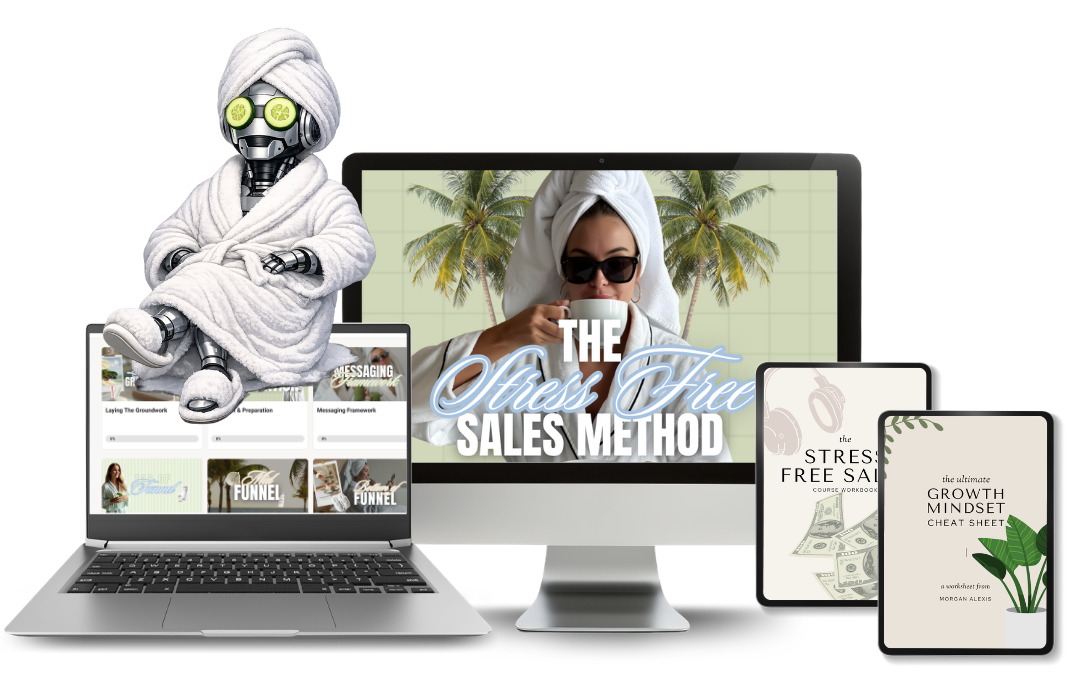
That’s exactly what you’ll build inside Stress-Free Sales.
You’ll learn how to create messaging that builds trust, positions you as the OBVIOUS choice, activates buying decisions, and creates a customer journey that naturally moves people from discovering you…to becoming your customer.
The goal isn’t to become better at answering objections. The goal is to market in a way that prevents MOST of them in the first place.
If you’re ready to stop guessing why people aren’t buying and start building a sales system that creates trust before the sales conversation even begins…I’d love to have you inside Stress Free Sales.
Once you identify the gap, you don’t need to become more persuasive. You need to become more precise.